Crypto Ledger Account Management: Complete Organization Guide
Add accounts, organize assets, manage tokens and NFTs.
Crypto Ledger Account Management provides tools for organizing cryptocurrency holdings across multiple blockchains, accounts, and asset types. The hierarchical deterministic wallet architecture enables unlimited account creation from a single recovery phrase, with each account deriving unique addresses while maintaining unified backup through the seed phrase. Effective account management improves portfolio organization, privacy through address separation, and operational efficiency.
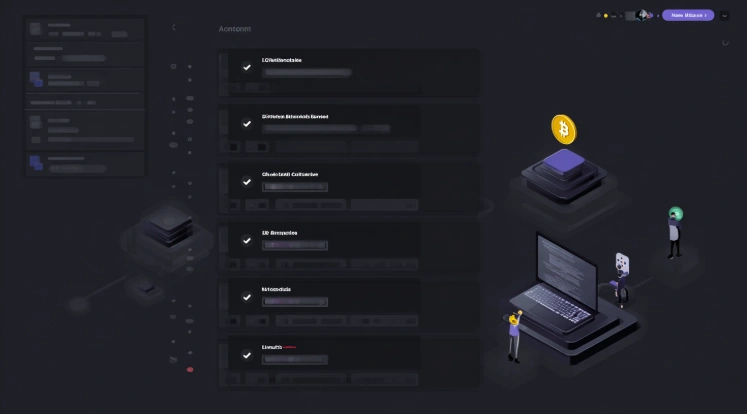
Crypto Ledger Manage Assets functionality extends across all supported coins, tokens, and NFT collections. Users can create multiple accounts per blockchain, name them for easy identification, and organize holdings by purpose, source, or any preferred categorization scheme. Unlike simpler wallets from Trezor or KeepKey, Ledger Live provides comprehensive portfolio management with real-time valuations, detailed transaction histories, and advanced organizational features. This page covers account creation, asset organization, and management strategies for effective cryptocurrency portfolio control.
Managing Accounts and Assets in Crypto Ledger
Crypto Ledger account management begins with understanding the relationship between blockchain apps, accounts, and addresses. Blockchain apps install on the hardware wallet to enable transaction signing for specific networks. Accounts represent organizational units within each blockchain, each generating unique addresses. Multiple accounts can exist for each installed app, enabling separation by purpose or improved privacy.
The account structure derives from the recovery phrase using standardized paths, meaning all accounts recreate identically when restoring from backup. This ensures that organizational schemes persist across device replacements or multi-device setups.
Adding and Removing Accounts
Crypto Ledger add account procedures for expanding wallet organization:
| Action | Steps | Considerations |
|---|---|---|
| Add account | Accounts > Add account > Select crypto > Connect device | Creates new derivation path |
| Remove account | Account settings > Remove account | Does not delete funds |
| Rename account | Account settings > Edit name | Helps organization |
| Hide account | Account settings > Hide | Reduces clutter |
| Star account | Click star icon | Prioritizes display |
Removing accounts from Ledger Live does not affect funds on the blockchain. Re-adding the account later restores full visibility and history. This enables decluttering the interface without security concerns.
Organizing Assets by Network
Crypto Ledger asset organization strategies for portfolio clarity:
- Separate accounts by purpose (trading, savings, DeFi)
- Create dedicated accounts for specific protocols
- Use naming conventions for quick identification
- Group related activities in single accounts
- Maintain separate accounts for privacy enhancement
- Consider tax reporting requirements in organization
- Balance convenience against address reuse concerns
Effective organization evolves with portfolio complexity. Simple holdings may need minimal structure while diverse portfolios benefit from systematic account hierarchies.
Multi-Account Strategies
Crypto Ledger account management supports sophisticated organizational schemes through unlimited account creation. Users can establish separate accounts for different purposes, sources, or operational requirements. Multi-account strategies improve both organization and privacy by reducing address linkability.
Account separation provides practical benefits beyond organization. Distinct accounts for trading versus long-term holding prevent accidental use of savings funds. Separate accounts for different income sources simplify tax reporting. Protocol-specific accounts contain risks from smart contract interactions.
Account Naming and Organization
Crypto Ledger manage assets through systematic naming:
Organization approaches:
- Purpose-based: "BTC Savings," "BTC Trading," "BTC DeFi"
- Source-based: "Salary," "Mining," "Staking Rewards"
- Time-based: "2024 Accumulation," "Legacy Holdings"
- Protocol-based: "Uniswap," "Aave," "Curve"
- Risk-based: "Cold Storage," "Active," "Experimental"
- Platform-based: "Exchange Withdrawals," "Direct Purchases"
- Tax-based: "Short-term," "Long-term Holdings"
- Family-based: "Personal," "Joint," "Business"
Consistent naming conventions enable quick identification and reduce errors when selecting accounts for transactions or verification.
Token and NFT Management
Crypto Ledger account management extends to tokens and NFTs stored alongside native blockchain assets. ERC-20 tokens on Ethereum, SPL tokens on Solana, and equivalent standards on other networks appear within their parent blockchain accounts. NFT collections display separately with visual previews and metadata.
Token management requires understanding that tokens share addresses with their parent blockchain. Ethereum and all ERC-20 tokens use the same addresses; receiving tokens requires only sharing the Ethereum address. This simplifies receiving but means token transactions require the parent blockchain's native currency for fees.
Managing ERC-20 and Other Tokens
Crypto Ledger asset organization for token portfolios:
| Token Type | Parent Blockchain | Fee Currency | Management Location |
|---|---|---|---|
| ERC-20 | Ethereum | ETH | Ethereum account |
| BEP-20 | BNB Chain | BNB | BNB Chain account |
| SPL | Solana | SOL | Solana account |
| TRC-20 | Tron | TRX | Tron account |
| Polygon tokens | Polygon | MATIC | Polygon account |
Token visibility may require manual addition in Ledger Live for less common tokens. The software supports thousands of tokens automatically with options to add custom tokens by contract address.
Frequently Asked Questions
-
Unlimited accounts can be created for each supported blockchain. All accounts derive from your single recovery phrase and restore automatically when recovering the wallet.
-
No. Removing an account only hides it from Ledger Live. Funds remain on the blockchain and become visible again if you re-add the account.
-
Yes. Restoring your recovery phrase on multiple Ledger devices creates identical account access. Changes made through any device appear on all devices after synchronization.
-
Go to account settings and use "Manage tokens" to search for and add tokens by name or contract address. Some tokens require manual addition.
-
Yes. Using fresh addresses for each transaction reduces blockchain analysis linking. Multiple accounts provide organizational separation with privacy benefits.
-
Ledger Live currently uses starring and naming for organization rather than folders. Use consistent naming conventions to create effective grouping.
-
Send normally between accounts. Transfers between your own accounts are regular blockchain transactions with standard network fees.